
Isaac’s Wells and the Life of the Spirit (Genesis 26)

The Bible doesn’t tell us much about Isaac’s life.

In contrast, it tells us a lot about his father, Abraham, and one of Isaac’s sons, Jacob.

In fact, in the chapters of Genesis covering these three patriarchs (Abraham, Isaac, and Jacob), the author finishes Abraham’s story and moves straight into Jacob’s. Only after beginning Jacob’s narrative does the author return to provide a little more details about Isaac’s life. Which brings us to Genesis chapter 26.

Compared to other Bible characters, and especially compared to his father Abraham, or Isaac’s son Jacob, Isaac’s life appears rather unremarkable. The one thing that does stand out was his failure when, out of fear the men would kill him due to his wife’s attractive appearance, he lied and said she was his sister.

The other aspect of his life was the miraculous way in which God prospered him.

First, God opened Rebekah’s womb, Isaac’s wife, and they were able to have twin boys.

Second, God commanded him not to flee from a famine that came to the land where he lived and promised to bless him.

God blesses Isaac

Under this divine promise, Isaac sowed in that land, and in the same year he reaped a harvest of a hundredfold. We know that sowing doesn’t guarantee a harvest—many factors can destroy it entirely. In those days, yielding a harvest of five to tenfold was considered a successful harvest; that is, getting five to ten grains for every one sown.

Yet Isaac reaped a hundredfold from each seed he sowed. This miraculous harvest happened during a significant famine. God had promised to bless him in that land, and He fulfilled His word. God prospered Isaac in an extraordinary way.

The wells

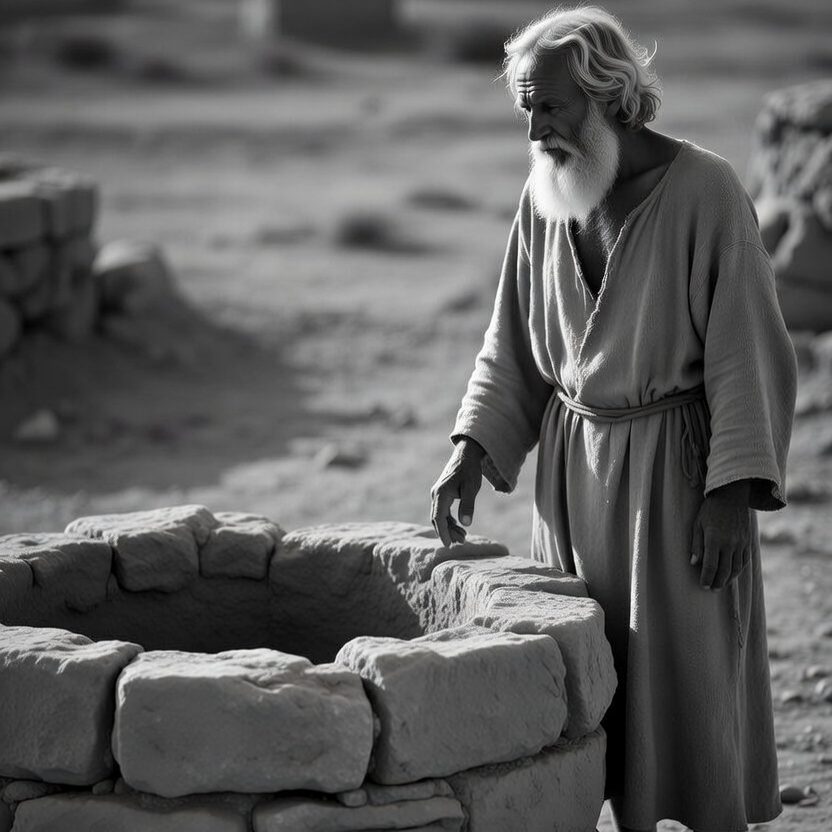
Another way God blessed Isaac was through wells of water. This provision was vital, especially during a famine.

What’s interesting is that these weren’t new wells—Isaac reopened the ones his father Abraham had dug years earlier. In that era, owning wells was comparable to owning oil fields today; they represented immense wealth.

Reopening the wells wasn’t easy. Besides the hard labor involved, Isaac faced opposition from the people of the land, the Philistines. Their envy was so intense that, instead of benefiting from the wells, they preferred to stop them up and fill them with earth. Every time Isaac reopened them, the Philistines quarreled over the water rights.

Isaac did not contend for the wells; he simply left them to the Philistines and kept digging until they no longer opposed him. It is interesting to note that although God was blessing him with the wells, He did not keep him from having to face opposition.

Some Bible teachers praise Isaac’s humble and peaceable character for not fighting the Philistines over the wells. Despite the opposition, he didn’t give up and continued reopening his father’s wells.

The spiritual blessing

As I read Genesis 26, I noticed something profound in the text: Isaac’s wells represent the life of the Spirit.

“If we live by the Spirit, let us also keep in step with the Spirit.”

Galatians 5:25, ESV

“But whoever drinks of the water that I will give him will never be thirsty again. The water that I will give him will become in him a spring of water welling up to eternal life.”

John 4:14, ESV

Isaac represents the Christian believer who seeks to live by the Spirit. The wells represent the life of the Spirit.

“For all who are led by the Spirit of God are sons of God.”

Romans 8:14, ESV

This spiritual blessing far surpasses any material prosperity.

“For the law of the Spirit of life has set you free in Christ Jesus from the law of sin and death.”

Romans 8:2, ESV

“For to set the mind on the flesh is death, but to set the mind on the Spirit is life and peace.”

Romans 8:6, ESV

Isaac was diligent in reopening his father’s wells, even amid opposition. In the same way, today’s Christian must seek these “spiritual wells,” these spiritual riches. And this blessing is available to us.

One practical way to receive this blessing is through reading the Bible.

“That he might sanctify her, having cleansed her by the washing of water with the word.”

Ephesians 5:26, ESV

May the Lord help us to dig and keep open these spiritual wells in our lives, so that living water may spring up within us, leading to eternal life.


Los pozos de Isaac y la vida del Espíritu (Génesis 26)

La Biblia no nos dice mucho sobre la vida de Isaac.

En contraste, la Biblia nos dice mucho sobre su padre, Abraham, y sobre uno de los dos hijos de Isaac, Jacob.

Es más, en los capítulos de Génesis que hablan sobre estos tres patriarcas (Abraham, Isaac, y Jacob), el autor termina de contarnos sobre Abraham y comienza contándonos de lleno sobre Jacob. No es hasta después de empezar a contarnos sobre Jacob que el autor regresa a contarnos más sobre la vida de Isaac, y esto nos lleva a Génesis capítulo 26. 

La vida de Isaac es poco impresionante. Lo que más resalta es su falla en decir que su esposa era su hermana, por miedo a que lo mataran a él, ya que su esposa era de buen parecer. Lo otro que también resalta es la manera milagrosa en que Dios lo prosperó.

Primero, Dios abrió el vientre de Rebeca, esposa de Isaac, y ellos lograron tener mellizos. Segundo, Dios le ordenó no huir de una sequía que llegó a la tierra donde él vivía y le prometió bendecirlo.

Dios bendice a Isaac

Bajo esta palabra o promesa de bendición de parte de Dios, Isaac sembró y ese mismo año cosechó al ciento por uno. Ahora, se dice que el que siembra no tiene garantizada una cosecha. Hay factores que pueden afectar la cosecha a tal grado que la cosecha entera se puede perder. En la antigüedad, una buena cosecha sería cosechar entre cinco y diez por uno. O sea, cosechar de cinco a diez frutos de cada semilla que se sembraba.

Isaac próspero de una manera milagrosa. Cosechó cien (100) frutos de cada semilla que sembró, y tuvo esta cosecha durante una sequía.  Esto sí fue impresionante. Dios le dijo que lo iba a bendecir en esa tierra y Dios lo cumplió. Dios enriqueció a Isaac de gran manera.

Los pozos

Otra manera en que Dios enriqueció a Isaac fue al proveerse de pozos. Esta provisión era muy importante, especialmente durante una sequía.

Ahora, lo interesante de estos pozos era que no eran nuevos pozos. Isaac volvió a excavar los pozos que su padre Abraham había excavado años atrás. Se dice que los pozos en ese entonces sería el equivalente a tener campos petrolíferos hoy en día. Así de rico llegó a ser Isaac.

El proceso de abrir los pozos no fue fácil. A parte de no ser una tarea fácil en sí, Isaac enfrentó oposición por parte de los habitantes de esa tierra, los filisteos. Tan grande era la envidia de estas personas, que en vez de beneficiarse de estos pozos, prefirieron taparlos y llenarlos de tierra, y cuando Isaac los volvió a excavar los filisteos pelearon por los derechos del agua. 

Isaac no peleo por los pozos, y simplemente les dejo los pozos a los filisteos y continuó excavando hasta que ya no le pelearon los pozos. Es interesante notar que aunque Dios lo estaba bendiciendo con los pozos, no lo guardo de la oposición. Isaac tuvo que lidiar con la oposición.

Algunos de los maestros de la Biblia halagan el carácter humilde y benigno de Isaac, ya que él no peleó con los filisteos por los pozos. A pesar de la oposición, él no se rindió y continuó cavando los pozos de su padre.

La bendición espiritual

A este punto de la lectura de Génesis 26 comencé a notar algo en el texto. Veo que los pozos de Isaac representan la vida del Espíritu.

“Si vivimos por el Espíritu, andemos también por el Espíritu.”

Gálatas 5:25, NBLA

“Pero el que beba del agua que Yo le daré, no tendrá sed jamás, sino que el agua que Yo le daré se convertirá en él en una fuente de agua que brota para vida eterna.”

Juan 4:14, NBLA

Isaac representa a la persona cristiana que busca la vida espiritual. Los pozos representan la vida el Espíritu.

“Porque todos los que son guiados por el Espíritu de Dios, los tales son hijos de Dios.”

Romanos 8:14, NBLA

Esta bendición espiritual está por encima de cualquier bendición o prosperidad material. 

“Porque la ley del Espíritu de vida en Cristo Jesús te ha libertado de la ley del pecado y de la muerte.”

Romanos 8:2, NBLA

“Porque la mente puesta en la carne es muerte, pero la mente puesta en el Espíritu es vida y paz.”

Romanos 8:6, NBLA

Isaac fue diligente en cavar los pozos de su padre, aun en medio de oposición, y de igual manera la persona cristiana hoy en día tiene que buscar estos pozos espirituales, esta riqueza espiritual. Y esta bendición espiritual está disponible para nosotros.

Una manera práctica de recibir esta bendición es por medio de la lectura de la Biblia.

“Para santificarla, habiéndola purificado por el lavamiento del agua con la palabra.”

Efesios 5:26, NBLA

Que el Señor nos ayude a cavar y mantener abiertos estos pozos espirituales en nuestras vidas, para que el agua viva brote dentro de nosotros, conduciendo a la vida eterna.

La gloria de los jóvenes

La gloria de los jóvenes es su fuerza,
Y la honra de los ancianos, sus canas.

Proverbios 20:29

He llegado a una edad en la que puedo valorar profundamente el significado de este proverbio. La juventud se caracteriza por la fuerza, la energía, el entusiasmo y la pasión. Aunque las personas de otras edades también pueden tener estas cualidades, es típicamente en la juventud donde esta fuerza alcanza su máximo esplendor.

La gloria de los jóvenes reside en su fuerza.

Por lo general, un joven no necesita esforzarse demasiado para poseer esta fuerza. Algunos prefieren ir al gimnasio para mantenerse en forma, pero incluso el joven promedio disfruta de un nivel de vigor y fortaleza que otras etapas de la vida no experimentan de la misma manera.

Aunque existen excepciones a las reglas, los proverbios reflejan la norma. Por supuesto, hay jóvenes que, debido a condiciones de salud, por ejemplo, podrían no disfrutar de esta fuerza, pero, en términos generales, la juventud está dotada de un nivel de energía único en comparación con cualquier otra etapa de la vida.

Los jóvenes están bendecidos con la capacidad de dejar una huella significativa en el mundo (a menudo sin siquiera darse cuenta) gracias a la fuerza innata que llevan dentro.

La historia nos ofrece el ejemplo de Alejandro Magno, un rey que construyó uno de los imperios más grandes de su época y logró hazañas extraordinarias en sus veinte años, falleciendo a los escasos 32 años.

Joven, tu gloria está en tu fuerza.

The glory of youth

The glory of young men is their strength,
but the splendor of old men is their gray hair.

Proverbs 20:29

I’ve reached a stage in life where I can truly appreciate the depth of this proverb. Youth is defined by strength, vitality, enthusiasm, and passion. While individuals of other ages may also possess these traits, it’s typically during youth that this strength shines at its brightest.

The glory of the young lies in their strength.

Generally, a young person doesn’t need to work hard to possess this strength. Some choose to hit the gym to stay in shape, but even the average young individual enjoys a level of vigor and strength unmatched by other life stages.

Though there are exceptions to the rule, Proverbs captures the general truth. Of course, some young people might not experience this strength due to health issues, for instance. But overall, the young posses a unique strength that sets it apart from any other phase of life.

Young people are blessed with the ability to leave a lasting mark on the world (often without even realizing it) thanks to the inherent strength they carry within.

History gives us the example of Alexander the Great, a king who built one of the mightiest empires of his time and achieved extraordinary feats when he was in his twenties, and into his early thirties (he passed away at age of 32).

Young person, your glory lies in your strength.

Proverbios – El temor del Señor

La introducción al libro de Proverbios – la cual se encuentra en los primeros siete versículos del primer capitulo – termina diciéndonos que el principio de la sabiduría es el temor del Señor.

El temor del Señor es el principio de la sabiduría; los necios desprecian la sabiduría y la instrucción.

Proverbios 1:7 (NBLA)

El temor del Señor es el principio de la sabiduría, y el conocimiento del Santísimo es prudencia.

Proverbios 9:10 (NBLA)

Otra manera de decir que el temor del Señor es el principio de la sabiduría seria: la persona sabia primeramente teme a Dios.

¿Qué es el temor de Dios?

El temor del Señor comúnmente se define como tener reverencia a Dios. Considerar a Dios en alta estima. Y esto es cierto. Sin embargo, el temor del Señor significa más que esto. Me gusta hacer este punto porque alguien puede tener a algo o a alguien en alta estima, pero eso no necesariamente significa que alguien construiría su vida basándose en tener a algo o a alguien en alta estima.

Mi definición del temor del Señor es esta: Conocer a Dios como creador de todas las cosas, y como tal, que Él sabe lo que es mejor para nosotros, y por lo tanto debemos buscar vivir según Su voluntad, bajo Su autoridad y reglas; obedecerle y esforzarnos por vivir fielmente a Él.

En el temor del Señor hay confianza fuerte, y sus hijos tendrán refugio.

Proverbios 14:26 (NBLA)

Tener el temor del Señor como base para vivir una vida caracterizada por la sabiduría trae una larga vida.

El temor del Señor prolonga los días, pero los años de los impíos serán acortados.

Proverbios 10:27 (NBLA)

El temor del Señor también debe preferirse ya sea en riquezas o en tener poco.

La recompensa de la humildad y el temor del Señor son riquezas, honra y vida.

Proverbios 22:4 (NBLA)

Mejor es poco con el temor del Señor que gran tesoro con ansiedad.

Proverbios 15:16 (NBLA)

Busquemos y perseveremos en el temor del Señor.

Proverbs – The fear of the Lord

We are told the purpose of the book of Proverbs in its introduction, which is found in the first seven verses of the first chapter (1:1-7). We learn that the source of true wisdom is the fear of the Lord. We have been looking at the different characteristics of wisdom, things such as prudence, instruction, discretion. These characteristics, taken together, form what the Bible teaches wisdom is. And at the heart of wisdom is the fear of the Lord.

The fear of the Lord is the beginning of knowledge; fools despise wisdom and instruction.

Proverbs 1:7 (ESV)

The fear of the Lord is the beginning of wisdom, and the knowledge of the Holy One is insight.

Proverbs 9:10 (ESV)

What is the fear of the Lord?

Typically, the fear of the Lord is defined as having a reverence of God. To hold God is high esteem. And this is true. However, the fear of the Lord means more than this. I like to make this point because someone can hold something or someone in high esteem but it wouldn’t necessarily mean someone would build their life on holding something or someone in high esteem.

My definition of the fear of the Lord is this: To know God as creator of all things, and as such, that He knows what is best for us, and therefore we should seek to live according to His will, under his authority and rules; to obey Him and strive to live faithfully to Him.

In the fear of the Lord one has strong confidence, and his children will have a refuge.

Proverbs 14:26 (ESV)

Having the fear of the Lord as the basis for living a life characterized by wisdom brings a long life.

The fear of the Lord prolongs life, but the years of the wicked will be short.

Proverbs 10:27 (ESV)

The fear of the Lord is also to be preferred whether in riches or in having little.

The reward for humility and fear of the Lord is riches and honor and life.

Provers 22:4 (ESV)

Better is a little with the fear of the Lord than great treasure and trouble with it.

Proverbs 15:16 (ESV)

Let’s seek and persevere in the fear of the Lord.

Proverbios – Complacencia

La palabra complacencia generalmente tiene una connotación negativa, y el libro de Proverbios no es una excepción.

Porque el desvío de los simples los matará, y la complacencia de los necios los destruirá.

Proverbios 1:32 (NBLA)

El diccionario de la lengua española define la palabra complacencia como:

Satisfacción, placer y contento que resulta de algo.

Aun la inteligencia artificial acuerda que la palabra complacencia tiene una connotación negativa. Dice lo siguiente:

Complacencia – se refiere a un estado de satisfacción o conformidad consigo mismo o con una situación, a menudo acompañado de una falta de motivación para cambiar o mejorar. Puede implicar una actitud de autocomplacencia o indiferencia, especialmente cuando se ignora la necesidad de esfuerzo o atención. En algunos contextos, también puede tener una connotación negativa, sugiriendo que alguien se siente demasiado seguro o relajado, lo que podría llevar a la negligencia.

Con razón el libro de Proverbios nos da una advertencia sobre la complacencia. Dice que la complacencia de un necio lo destruirá (Prov. 1:32, citado arriba). Pero el libro de Proverbios también nos ofrece una protección de la complacencia, esto es, la sabiduría.

Pero el que me escucha vivirá seguro, y descansará, sin temor al mal.

Proverbios 1:33 (NBLA)

En la ultima parte del primer capitulo de Proverbios vemos que la sabiduría se personifica y habla, y es ella la que esta hablando en estos dos últimos versículos del primer capitulo del libro y nos presenta dos caminos. Por el uno la complacencia necia que lleva a la destrucción, o la sabiduría que hace vivir a uno seguro, en descanso y sin temor al mal.

Proverbs – Complacency

The word complacency usually carries a negative connotation, and the book of Proverbs is no exception.

For the simple are killed by their turning away, and the complacency of fools destroys them.

Proverbs 1:32 (ESV)

The Merriam-Webster Dictionary defines complacency as:

Self-satisfaction especially when accompanied by unawareness of actual dangers or deficiencies.

An instance of usually unaware or uninformed self-satisfaction.

Even AI agrees that complacency is not highly esteemed:

The word «complacency» refers to a feeling of self-satisfaction or contentment, often accompanied by a lack of awareness or concern about potential problems or the need for improvement. It can imply a state of being overly comfortable or smug, sometimes leading to negligence or a lack of effort. In certain contexts, it carries a negative connotation, suggesting a dangerous level of unawareness or inaction.

The good news is that the book of Proverbs offers us help.

But whoever listens to me will dwell secure and will be at ease, without dread of disaster.

Proverbs 1:33 (ESV)

This is wisdom personified and talking to us. Foolish complacency will lead to destruction, but wisdom will keep it far and will make its possessor secure and at ease.

Proverbios – Prudencia

La prudencia es otra de las virtudes que vemos en el libro de Proverbios. Lo podemos notar desde la introducción del libro en sus primeros siete versículos del primer capitulo.

Para dar a los simples prudencia,
Y a los jóvenes conocimiento y discreción.

Proverbios 1:4 (NBLA)

Se puede decir, entonces, que la persona que es sabia es una persona prudente.

Yo, la sabiduría, habito con la prudencia,
Y he hallado conocimiento y discreción.

Proverbios 8:12 (NBLA)

Miremos cómo se define la prudencia.

Según el Diccionario de la Lengua Española, prudencia se define como:

  • 1. Templanza, cautela, moderación.
  • 2. Sensatez, buen juicio.

La persona prudente piensa y considera las consecuencias antes de hablar o de actuar.

El necio no se deleita en la prudencia, sino solo en revelar su corazón.

Proverbios 18:2 (NBLA)

Lo opuesto de la prudencia es la imprudencia. Se puede decir que la imprudencia es no pensar y no considerar las consecuencias antes de hablar o actuar.

Quizás no sea tan fácil observar la prudencia en las personas. Pero es más fácil observar la imprudencia en la manera que las personas hablan o actúan. Entonces, cuando observamos la manera en que las personas imprudentes hablan y actúan, podemos saber que no decir o hacer.

El lento para la ira tiene gran prudencia, pero el que es irascible ensalza la necedad.

Proverbios 14:29

Busquemos la prudencia.

Hijo mío, no se aparten estas cosas de tus ojos; Guarda la prudencia y la discreción.

Proverbios 3:21

Proverbs – Prudence

Prudence is another of the virtues we see in the book of Proverbs. We can notice it from the introduction of the book in its first seven verses of the first chapter.

To give prudence to the simple,
and knowledge and discretion to the youth.

Proverbs 1:4 (ESV)

It can be said, then, that a wise person is a prudent person.

I, wisdom, dwell with prudence,
and I find knowledge and discretion.

Proverbs 8:12 (ESV)

Let’s look at how prudence is defined.

According to the Oxford English Dictionary, prudence is defined as:

  • The quality of being prudent; carefulness and caution in practical affairs; foresight in decision-making.
  • Wisdom or good judgment in the management of affairs, especially in avoiding risks or adverse consequences.

A prudent person thinks and considers the consequences before speaking or acting.

A fool takes no pleasure in understanding,
but only in expressing his opinion.

Proverbs 18:2 (ESV)

The opposite of prudence is imprudence. It can be said that imprudence is not thinking and not considering the consequences before speaking or acting.

Perhaps it is not so easy to observe prudence in people. But it is easier to observe imprudence in the way people speak or act. So, when we observe the way imprudent people speak and act, we can know what not to do.

Whoever is slow to anger has great understanding,
but he who has a hasty temper exalts folly.

Proverbs 14:29 (ESV)

Let’s pursue prudence.

My son, do not lose sight of these—
keep sound wisdom and discretion.

Proverbs 3:21 (ESV)